Throw a backyard party with the right inflatable, and you set the tone the moment kids (and a few brave adults) see it. You’ll hear the zip of the blower and feel that little gust of cool air, then the squeals start. The wrong choice, though, can turn into line chaos, soggy turf, or a nervous host glued to the breaker panel. After more parties than I can count and years working with an event rental company, I’ve learned what actually matters when you’re picking an inflatable bounce house. The best pick fits your space, your guests, and your day’s rhythm, not just your Pinterest board.
Below are ten practical, field-tested tips to help you choose well. Along the way, I’ll point out common traps, sizing nuances, and how to talk to your vendor so you get exactly what you expect.
1) Start with headcount, ages, and the flow of the day
The fastest way to narrow choices is to match the inflatable to who’s using it and when. A toddler bounce house with soft walls and a shallow step-in works beautifully for kids under five, but it will bore a pack of eight-year-olds in less than a minute. On the flip side, a towering inflatable slide rental with a steep drop may intimidate younger kids and need extra supervision.
Think about cycles. For a typical birthday party with 15 to 25 kids ranging from four to ten, a combo bounce house gives you room to bounce plus a small slide, sometimes a basketball hoop inside. This variety keeps lines moving and spreads out the energy. If your guest list skews older or you’re hosting mixed ages over a longer event window, consider an obstacle course rental. It’s a throughput king, since two kids can run simultaneously and finish quickly, which reduces crowding and lets shy kids participate without a big audience.
When adults are in the mix, be candid with your event rental company about expected weight ranges. Some inflatables are rated for all-ages, others strictly for kids. It’s better to steer adults to lawn games and leave the inflatable bounce house to the kids if the unit isn’t rated for heavier loads.
2) Measure your yard like you’re planning a deck, not a picnic blanket
I’ve watched deliveries stall because a gate opening was two inches too narrow or a power line ran directly overhead. Measure the footprint where you want the inflatable, then measure approach paths, gate widths, and setbacks. Rental listings often show the unit size and the required clearance area. They are not the same. For example, a 13 by 13 inflatable castle rental usually needs at least 15 by 15 of flat ground and 15 feet of overhead clearance. Slides and combos often need 16 to 20 feet of height.
Surface matters. Natural grass is forgiving and anchors well with stakes. Synthetic turf or patios force the crew to use water barrels or sandbags, which add setup time and can affect placement. If you’re renting a water slide, note where runoff will go. Plan for drainage, not just proximity to a hose. A backyard with even a slight slope can turn the landing zone into a marsh if it’s placed uphill of your seating or kitchen.
Access is the sleeper issue. A standard 13 by 13 can weigh 150 to 250 pounds rolled up. Larger water slide rentals and obstacle courses can exceed 400 pounds and require a dolly and a straight shot from truck to setup spot. Tight turns, steps, or soft ground complicate everything. Tell your party inflatable rentals provider exactly what the crew will face, and send photos if you can.
3) Match the inflatable type to your weather and season
Humidity and high temps amplify everything. In hotter months, a water feature buys you an extra hour of happy play. A combo bounce house with a small waterslide or a single-lane inflatable slide rental that can be used wet is a smart pick when highs push into the 80s and 90s. In shoulder seasons or on days where the breeze bites, an indoor bounce house rental at a community space or garage can save the day. Many event rental companies, however, won’t set up inside homes because of anchoring and clearance limitations, so check the site in advance.
Wind is another factor. Most reputable party equipment rentals adhere to wind limits in the 15 to 20 mph range. That’s a hard stop. If your yard is elevated or your area regularly sees gusts, ask for weighted anchoring specifics and discuss reschedule policies. Seasonally wet ground can also affect anchoring with stakes, particularly if underground utilities are near the planned area. Mark utilities and sprinkler lines beforehand, or you can end up improvising a new layout on delivery day.
4) Look beyond the photo to the material, seams, and safety features
Not all inflatables are built alike. Commercial-grade vinyl is thicker and resists abrasion better than residential-grade units. If you’re booking through a reputable bounce house rental provider, you’re likely getting commercial quality, but verify. Ask about vinyl thickness, double-stitched or quadruple-stitched seams, and the age of the unit. A well-maintained five-year-old unit can still look and perform great, but faded colors and scuffed mesh can hint at heavy use. That doesn’t make it unsafe, but you’ll want reassurance that inspections and repairs are current.
Check for safety elements like covered seams, sturdy netting that hasn’t stretched out, and a proper step with safety handles at the entrance. For water slide rentals, look for non-slip climbing steps and high, rigid side rails on the slide lane. The landing area should be deep enough to slow kids without them bumping feet on the ground. For toddler bounce house setups, the entrance should be low to the ground with gentle slope, and interior features should be soft with no narrow pinch points.
Good event rental companies will explain weight limits, maximum occupancy, and the rules you’ll need to enforce. If you sense hesitation or vague answers, keep shopping.
5) Plan power like you would for a DJ or a food truck
A blower is the heart of an inflatable. Most standard bounce houses use a 1 to 1.5 horsepower blower drawing roughly 7 to 12 amps. Larger combo units or inflatable slide rentals can push 12 to 15 amps per blower, and some units require two blowers. That means separate circuits, not just separate outlets on the same circuit.
Ask your provider for the exact electrical requirements and whether extension cords are included. Heavy-gauge extension cords rated for outdoor use are essential. A typical 50-foot run of 12-gauge cord is common. Don’t daisy-chain a bundle of skinny cords from your garage. That’s how breakers trip and how blowers starve for power.
Generators are sometimes the cleanest solution, especially for large yards or older homes with limited circuits. Rental companies can provide a generator matched to the blower load. That extra hum in the background is worth it if it saves your kitchen outlets for crockpots and your guests from sudden deflations.
6) Choose features that fit attention spans and your event length
Kids bounce. Then they want something to do. That’s why combo bounce houses exist. A small slide, a basketball hoop, maybe a pop-up obstacle inside keeps them looping through different actions rather than forming a stationary traffic jam. For a two-hour birthday party with 12 to 15 kids, a standard combo keeps everyone rotating without long lines.
For larger groups, think throughput. Obstacle course rental units work brilliantly because they run in parallel. Two kids start, crawl, climb, slide, and exit with a clear finish, which maintains momentum. Older kids adore them, and you can stage friendly races. If your event is open-house style with guests drifting in and out over four to six hours, diversified attractions help: a combo bounce house on one side of the yard, lawn games near the adults, and maybe a small toddler bounce house tucked near shade so the littles aren’t overwhelmed.
Themed units, like an inflatable castle rental, photograph well and add a visual anchor. Just be sure the theme doesn’t sacrifice function. A dramatic turret looks great but won’t compensate for a too-small play area if you expect twenty kids.
7) Water fun without the mud fiasco
Water slide rentals transform a hot afternoon, but water plus grass plus kids is a recipe for mess if you don’t set boundaries. Plan your water path and your dry path. Put towels and a shoe bin at the landing exit. Place the slide so kids step onto a designated mat, then on to a dry walkway, not across your flower beds. If you have fresh sod or delicate landscaping, skip water features this time or place the unit on a durable surface with protective tarps.
Ask for a drip timer on the hose line that feeds the slide. It reduces water consumption and keeps the slide slick without turning the yard into a bog. If the slide ends in a pool, confirm depth and whether there’s a fill time requirement. Small splash pools fill in 10 to 20 minutes depending on water pressure, larger ones can take longer. Remember water is heavy. A fully loaded pool adds weight that can shift a poorly leveled setup, which is another reason to trust the crew’s site choice.
Finally, mind sunscreen and heat. Water doesn’t negate sun exposure. A pop-up shade near the landing with a cooler of water and a sunscreen station goes a long way.
8) Vet your vendors the way you vet babysitters
Cleanliness and reliability make or break a rental experience. I look for companies that publish their cleaning process and show photos of their gear at delivery, not just glossy catalog shots. Ask how they sanitize between rentals and how they dry units after water use. Mildew is the enemy of inflatables. A good company schedules drying time, not just back-to-back bookings.
Insurance and permits matter more than logos and themes. Confirm they carry general liability insurance and, if required in your area, that they hold the proper permits for public spaces. Ask about their weather and cancellation policy in plain language. The best party inflatable rentals teams communicate early if wind or storms are https://bubblybouncerentals.com/rentals/bounce-houses/ a concern and offer reschedules, not last-minute surprises.
Responsiveness is a tell. If they answer questions clearly and quickly in the planning stage, they’ll likely be just as professional at drop-off and pick-up. The crew should walk you through rules, anchor points, breaker locations, and emergency shutoff, then leave a contact number that actually reaches someone during the party.
9) Budget with eyes open to hidden costs and smart add-ons
Published prices can be misleading if you only look at the headline rental fee. Delivery distance, setup complexity, surface type, and power needs can change the final number. A basic bounce house rental might run in the low hundreds for a day, while a large dual-lane water slide or a long obstacle course can land several hundred higher, especially on peak weekends.
Ask for an all-in quote: rental rate, taxes, delivery, setup, teardown, and any fees for sandbagging, stair carries, or late pickup. If you’re booking a generator, factor fuel. If you need an attendant, some companies provide trained staff at hourly rates. That can be worth it for larger events or if you’d rather not police rules while hosting.
Bundle strategically. Many backyard party rentals companies offer packages that include tables, chairs, and concessions. Cotton candy and popcorn machines are crowd-pleasers, but they also create stickiness near your inflatable party attractions. Think about placement and cleanup. A snow cone machine pairs well with water slides, while a popcorn machine belongs near seating, not near bounce entrances.
10) Set clear rules and make supervision a role, not an afterthought
A safe inflatable is only as safe as the supervision. An adult needs to watch capacity and behavior, especially at entrances and on slide ladders. Don’t count on parents to hover. Assign a rotation among a few adults or hire an attendant. A posted rule sheet helps, but verbal reminders work best. Shoes off, no flips, no food or drinks inside, and no mixing big kids with toddlers on the same surface.
Put the entrance where you can see it easily from your hosting spot. If you have a pool, keep the inflatable far from it and gate the pool or assign a pool watcher. If kids will use both, stagger access: bounce time, then snack time, then pool time. That breaks up the crowd and reduces risky dashes between wet and dry areas.
Pay attention to weather during the party. If winds pick up beyond what your vendor specified, pause usage and power down. It’s not dramatic to be cautious. It’s responsible.
How to choose between popular inflatable types
It can still feel like a lot of options, so here’s a quick, practical comparison for common picks:
- Standard bounce house: Best for small to mid-size gatherings with kids five to nine. Lower cost, minimal footprint, easy supervision. Add a hoop inside if available to keep kids engaged. Combo bounce house: Ideal for birthday party rentals where you want variety without a huge slide. Good for mixed ages, typically fits in mid-size yards, solid throughput. Inflatable slide rental: Choose single-lane for smaller groups, dual-lane for larger ones. Dry slides work year-round. Wet versions shine in summer and require careful placement. Obstacle course rental: Best for big groups and wide age ranges. Fast cycles, inherently competitive. Needs more space and usually more power. Great for school or neighborhood events. Toddler bounce house: Soft, low walls, gentle features for under-fives. Keep separate from older kids. Works indoors if the venue allows and ceiling height permits.
Indoor bounce house rental considerations
Sometimes weather, HOA rules, or yard constraints make indoor the smart move. Community centers, church halls, or rented studios often allow inflatables as long as ceilings are high enough and floors are protected. Ask for the unit’s exact height and footprint, plus required clearance. Most indoor venues prohibit staking, so the rental team will use sandbags. Confirm loading access and elevator size if applicable. Power becomes more predictable indoors, but you still need dedicated circuits. Tape down cords and set clear entry and exit paths. One advantage indoors is noise control. Blowers hum less in a large open hall, and neighbors won’t mind.
A quick host’s checklist for the final 48 hours
Use this short list to keep everything tight before your event.
- Confirm delivery window, surface type, power plan, and pickup time with your event rental company. Walk the yard, remove pet waste, sticks, and toys, and mark sprinklers and low-hanging branches. Measure gate width and approach path, and unlock any side gates well before arrival. Stage power: identify circuits, set out heavy-gauge cords, clear the breaker panel area. Prep a supervision plan and a simple sign with rules near the entrance.
Real-world scenarios and how to adapt
A backyard birthday with 18 kids, ages four to nine, in late June: Go with a combo bounce house that can be used wet, positioned on grass with late-afternoon shade. Put the entrance facing your seating area for easy monitoring. Add a small toddler bounce house off to the side for siblings under four. Portable mats at the exits keep grass from turning to mud. If the budget allows, add a snow cone machine on a separate table far from the inflatable.
A neighborhood block party with 40 to 60 kids cycling through: Choose an obstacle course rental plus a standard bounce house. Mark a start and finish line for the course and let kids race in pairs. Assign two adult attendants, one at the start and one at the inflatable entrance. If space allows, set up the bounce house closer to the younger kids’ area and the obstacle course near the older kids. Consider a generator to isolate power.
A winter birthday in a community hall: Book an indoor bounce house rental or a low-height combo designed for indoor use. Verify ceiling clearance of at least 13 to 15 feet for many standard units. Use mats at the entrance to protect floors. Keep an eye on occupancy since indoor acoustics can make supervision feel harder, and post an easy rotation system to avoid crowding.
Cleaning, setup, and what a professional crew should do
When the truck arrives, the crew should walk the site, confirm placement, and explain anchoring. For grass setups, they’ll use stakes and hammer them fully down. On hard surfaces, they’ll sandbag thoroughly and check tension. The unit should be swept and sanitized before and after inflation. Don’t be shy about asking them to wipe a smudge or re-level a slide if the landing looks uneven. A small adjustment at the start prevents headaches later.
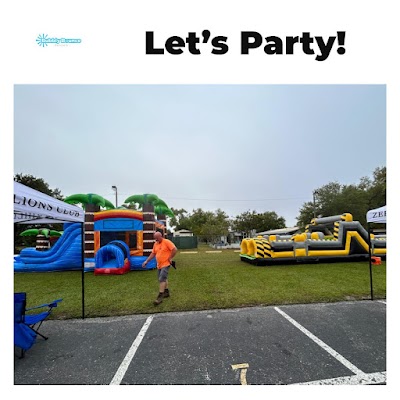
Before they leave, they should cover the power switch location and show you how to shut down in case of an emergency. Keep the blower intake clear from leaves or bags. Check inflatable rentals the seams and anchors once mid-party, especially if a lot of older kids are playing. It takes thirty seconds and adds peace of mind.
Common pitfalls and how to avoid them
Undersizing is the most frequent mistake. Hosts assume a standard bounce house will handle 20 energetic kids at once. It won’t. Plan for cycles and capacity limits, and pick the style that moves kids through activities. Another trap is forgetting the sun path. A beautiful morning setup can turn into a hot vinyl skillet by 2 p.m. Shade sails or a simple canopy can keep surfaces comfortable. Also, watch for sprinkler timers. Nothing ruins a party like a surprise spray under your inflatable. Turn systems off a day in advance.
Finally, leave buffer time before your party start. If your invite says 2 p.m., aim for delivery by noon, not 1:45. That window absorbs traffic delays, placement adjustments, and any last-minute power reroutes.
Bringing it together
The right inflatable feels almost effortless at the party, which is the sure sign you did the work up front. You matched the unit to your guest ages, shaped the space in your yard, and planned for power, shade, and supervision. Whether you pick a bright inflatable castle rental for a fairy-tale theme, a competition-friendly obstacle course rental for a school fundraiser, or an all-ages combo for family-style backyard party rentals, keep the priorities simple: safety, fit, and flow. Choose a professional, communicative provider for your bounce house rental, ask precise questions, and use your yard’s strengths. That’s how a plastic and air structure turns into an unforgettable centerpiece and not a logistical headache.
If you keep these ten tips in mind, your inflatable party attractions will do exactly what they’re supposed to do: make kids beam, give parents easy smiles, and let the day breathe without forcing it. The blower hums, the laughter builds, and your backyard becomes the place everyone wants to be.